
speakers
Prof. Björn Schuller
TUM University Hospital, Germany
Title: AI for a Living Planet: Reasoning Across Human, Animal, and Environmental Health

Abstract
Human health does not begin in the hospital. It begins in the air we breathe, the animals we live with, the food systems we depend on, the ecosystems we disturb, and the signals our bodies send long before disease becomes visible. In this keynote, we will explore how the next generation of artificial intelligence can help us move from reactive healthcare to One Health intelligence: AI that connects human, animal, and environmental health into one living system. Drawing on progress in multimodal perceptive and reasoning AI for digital one health, the talk will show how machines can learn to listen to life across species and scales — from human voice and behaviour to animal vocalisations, biosignals, ecological soundscapes, and multimodal digital biomarkers. AI should not merely classify the symptoms of a breaking world. It should help us hear the warning signs early enough and help to act — for humans, animals, and the planet we share.
Biography
Björn Schuller received his diploma, doctoral degree, habilitation, and Adjunct Teaching Professor in Machine Intelligence and Signal Processing all in EE/IT from TUM in Munich, Germany where he is Full Professor and the Chair of Health Informatics. He is also Full Professor of Artificial Intelligence and the Head of GLAM at Imperial College London, UK, co-founding CEO and current CSO of audEERING - an Audio Intelligence company based near Munich and in Berlin, Germany, Core Member in the Munich Data Science Institute (MDSI), Principal Investigator in the Munich Center for Machine Learning (MCML), Fellow of the Imperial Data Science Institute. He is a Fellow of the ACM, Fellow of the IEEE and Golden Core Awardee of the IEEE Computer Society, Fellow of the BCS, Fellow of the ELLIS, Fellow of the ISCA, Fellow and President-Emeritus of the AAAC, and Elected Full Member Sigma Xi. He (co-)authored 1 500+ publications (80 000+ citations, h-index > 110 ranking him number 8 in the UK for Computer Science). He is Field Chief Editor of Frontiers in Digital Health, and Editor in Chief of AI Open and was Editor in Chief of the IEEE Transactions on Affective Computing amongst manifold further commitments and service to the community. His research interests include health informatics, affective computing, and computer audition.
Prof. Carlos Artemio Coello Coello
CINVESTAV-IPN, Mexico
Title: An Introduction to Multi-Objective Evolutionary Algorithms and some of their Applications in Bioinformatics and Bioengineering.

Abstract
Multi-objective optimization problems are those in which we have two or more objectives that we aim to optimize at the same time, but which are defined in such a way that at least two of them are conflicting (i.e., improving one implies worsening another). In this talk, a gentle introduction to multi-objective optimization and the use of evolutionary algorithms to solve such problems Will be provided. The topics to be discussed include the types of multi-objective evolutionary algorithms in current use (i.e., Pareto-based, decomposition-based and indicator-based) as well as the concept of elitism and density estimator and their relevance in evolutionary.
multi-objective optimization. In the final part of the talk, a few applications of multi-objective evolutionary algorithms in bioinformatics and bioengineering will be provided.
Biography
Carlos Artemio Coello Coello received a PhD in Computer Science from Tulane University (USA) in 1996. His research has mainly focused on the design of new multi-objective optimization algorithms based on bio-inspired metaheuristics (e.g., evolutionary algorithms), which is an area in which he has made pioneering contributions. He currently has more than 600 publications, including more than 200 journal papers and 50 book chapters. His publications currently report over 84,850 citations in Google Scholar (his h-index is 110). He has received several awards, including the National Research Award (in 2007) from the Mexican Academy of Science (in the area of exact sciences), the 2009 Medal to the Scientific Merit from Mexico City's congress and the 2012 National Medal of Science in Physics, Mathematics and Natural Sciences from Mexico's presidency (this is the most important award that a scientist can receive in Mexico). Additionally, he is the recipient of the 2013 IEEE Kiyo Tomiyasu Award, "for pioneering contributions to single- and multiobjective optimization techniques using bioinspired metaheuristics", of the 2016 The World Academy of Sciences (TWAS) Award in “Engineering Sciences”, and of the 2021 IEEE Computational Intelligence Society Evolutionary Computation Pioneer Award. Since January 2011, he is an IEEE Fellow. He is currently the Editor-in-Chief of the IEEE Transactions on Evolutionary Computation. He is Full Professor with distinction (Investigador Cinvestav 3F) at the Computer Science Department of CINVESTAV-IPN in Mexico City, Mexico.
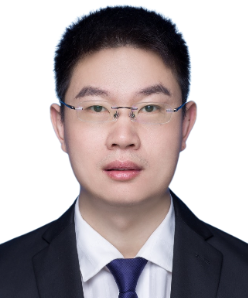
Prof. Dongrui Wu
Huazhong University of Science and Technology, China (IEEE Fellow)
Title: Privacy-Preserving Brain-Computer Interfaces.
Abstract
A brain-computer interface (BCI) enables direct communication between the brain and external devices. It can be used to research, enhance or repair human cognitive and sensory-motor functions. Electroencephalograms (EEGs) are frequently used in BCIs. However, EEGs contain rich user private information, e.g., health, emotion, etc., beyond BCI task related information. Privacy protection is very important to the broad applications of EEG-based BCIs. This talk will introduce machine learning algorithms for privacy-preserving BCIs.
Biography
Dongrui Wu (IEEE Fellow) received a B.E in Automatic Control from the University of Science and Technology of China, Hefei, China, in 2003, an M.Eng in Electrical and Computer Engineering from the National University of Singapore in 2006, and a PhD in Electrical Engineering from the University of Southern California, Los Angeles, CA, in 2009. He is now Chair Professor of School of Artificial Intelligence and Automation, Huazhong University of Science and Technology, Wuhan, China. His research interests include brain-computer interface and machine learning. He has more than 200 publications (19000+ Google Scholar citations; h=73), with 7 outstanding paper awards from IEEE. His team won National Champion of the China Brain-Computer Interface Competition in eight successive years (2019-2026). He is the Editor-in-Chief of IEEE Transactions on Fuzzy Systems.
Prof. Bernard J. Jansen
The Pennsylvania State University, USA
Title: Fostering Understanding in the Bioinformatics & Bioengineering Domain Via AI Educational Platforms.

Abstract
Fostering understanding in the Bioinformatics and Bioengineering domain by leveraging AI educational platforms is critical for preparing the next generation of researchers. In this presentation, we present Cipherbot, a cutting-edge, dialogue-based learning platform for presenting Bioinformatics and Bioengineering courses and research. By using LLMs with RAG, Cipherbot facilitates interactions with course materials, supporting course-specific dialogue and minimizing hallucinations, benefiting both instructors and students. For instructors, Cipherbot handles student questions about course content, regardless of classroom hours, and provides analytics to inform course insights, including students' learning stages. Course setup is a light lift; instructors can be up and running in minutes. For students, Cipherbot has multiple conversational modes, including Q&A, mentoring, and problem-focused learning, with responses grounded in the course material. Cipherbot provides multilingual support, content delivery, audio, and podcasts, and a knowledge graph that visualizes a learning trajectory. Outside the classroom, Cipherbot is an excellent research platform that offers large-scale, real-world deployment and robust interaction data suitable for studies in Bioinformatics and Bioengineering. It facilitates collaboration among faculty, researchers, and students and allows them to use Cipherbot independently.
Biography
Dr. Jim Jansen is a Visiting Professor in the Department of Information Management at Peking University, Beijing, China, working on the automatic visualization of user data. He is a West Point graduate with a Ph.D. in computer science from Texas A&M University. Professor Jansen is editor-in-chief of Information Processing & Management, former interim editor-in-chief of the International Journal of Information Management, and former editor-in-chief of Internet Research. He has received several awards and honors, including an ACM Research Award, six application development awards, a product innovation award, and a university-level teaching award, as well as other honors in writing, publishing, research, teaching, and leadership. Dr. Jansen has authored or co-authored more than 400 research publications, with articles appearing in a multi-disciplinary range of journals and conferences. He is a co-author of the books Data-Driven Personas (Springer Nature) and Understanding Audiences, Customers, and Users via Analytics (Springer Nature). For more information, see https://www.bernardjjansen.com.
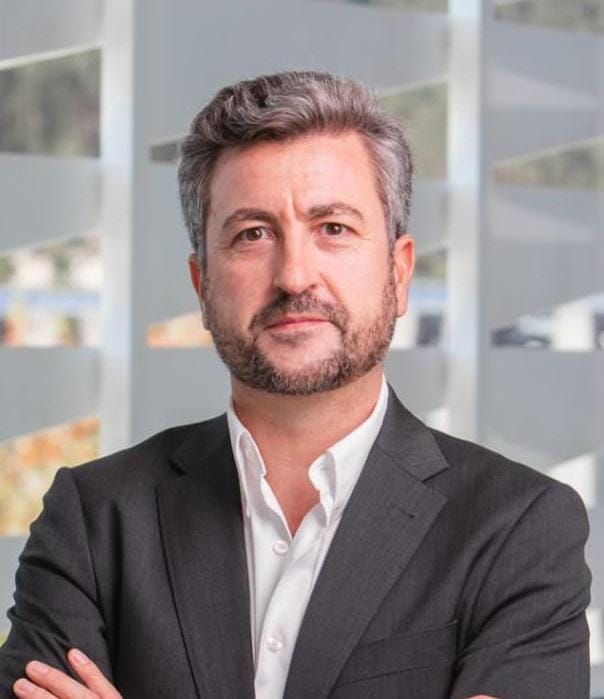
Prof. J. Miguel Oliveira
University of Minho, Portugal
Title: Engineering strategies and AI tools for the biofabrication of 3D in vitro models and tissue engineered constructs.
Abstract
In this keynote lecture, the fundamentals of tissue engineering and regenerative medicine principles will be discussed. The important role of biomaterials and scaffolds in such regenerative strategies will be also overviewed, and the translational challenges overviewed. The latest developments involving the design and engineeering of biomaterials to be used as artificial extracellular matrices as well as the biofabrication methods emplyed in the development of 3D in vitro complex models will be also presented. The current AI tools thatr are currently used in the biofabrication of tissue engineered constructs will be also discussed. Several examples of ongoing research works and EC-funded projects (e.g., Oncoscreen and EngVIPO) lead by the I3Bs-UMINHO (Portugal) will be also highlighted. A future outlook of these areas will be also presented.
Biography
J. Miguel Oliveira BSc, PhD, FBSE (Portuguese, M, 48 years old) is a Principal Investigator with Habilitation at the 3B's Research Group, member of the PT Government Associate Laboratory ICVS/3B’s (https://3bs.uminho.pt/people/94) and Institute 3Bs (I3Bs), University of Minho (Portugal). He is the Vice President of I3Bs, President Elect of the Scientific Council of I3Bs, and Past-Director of Pre-Clinical Research at the FIFA MEDICAL CENTER, Estádio do Dragão, Porto, PT (2013-2020). Currently, he is a Lecturer in Doctoral Program in Tissue Engineering, Regenerative Medicine and Stem Cells (TERM&SC) at UMinho, PT (since Dec. 2013). He was also an invited lecturer at the Faculty of Medicine, U. Porto (2013-2019). In addition, he was member of the National Ethics Committee for Clinical Trials from Serviço Nacional de Saúde (SNS) (PORTUGAL) (Jan. 2021- Aug. 2024). Currently, he is an Expert and member of the Steering Committee of the ERA Working Group 4 (WG4: Openness and awareness) of the new policy action “Accelerating New Approach Methodologies (NAMs) to advance biomedical research and testing of medicinal products and medical devices”, contributing to policies on standardisation, openness and research quality (2026-2029). Over the years, he has focused his work on the field of biomaterials for tissue engineering, nanomedicine, stem cells, and cell/drug delivery. He also set up a new research line within the ICVS/3B’s on 3D in vitro models for cancer research. As a result of his proficiency, he has published so far more than 500 scientific contributions in scientific journals with the referee. Miguel Oliveira has 24 patents (filled & submitted), published 13 books (plus 3 in preparation), 20 special issues/topic collections in scientific journals, and more than 130 book chapters in books with international circulation. He has participated in more than 700 communications in national/international conferences and has been invited/keynote speaker in more than 110 plenary sessions and seminars. He has an D-index of 63, h-index of 83, i10 of 318, and received more than 25 500 citations. Since 2021, his contributions have been consistently cited more than 2500 times per year. He has been awarded several prizes including the prestigious “Investigador FCT 2012 and Investigador FCT 2015” attributed by FCT (Portugal), and Jean Leray Award 2015 from European Society for Biomaterials for Young Scientists for Outstanding Contributions within the field of Biomaterials. In Nov. 2023, Dr. Oliveira has been appointed Fellow Biomaterials Science and Engineering (FBSE) for the excellent professional standing and high achievements in the field of biomaterials science and engineering. In recognition for his scientific contributions, he has been distinguished with the Scientific Merit Award 2026 by University of Minho (Portugal) in February 2026. Also in 19th of June 2026, he has been awarded the Medal of Honor from Freguesia de Caldelas, Guimarães (Portugal), his home town for his extraordinary scientific contributions, career path and social intervention. He is very active on the elaboration and scientific coordination of several PT and international funded projects. He is the coordinator of the project EngVIPO - Engineering Vascularized Implants for Personalised Osteochondral Tissue Regeneration: From medical imaging to pre-clinical validation (https://engvipo.i3bs.eu/) funded from the European Union's Horizon Europe (HORIZON-MSCA-2023-SE-01-01) under the Grant Agreement Number 101183041. He is the Editor-in-chief of the In vitro Models Journal (Springer Nature, first IF of 2.4 in 2024). He is one of the Editors of the Book Series on Biomaterials, Bioengineering and Sustainability (Springer). He also integrates the advisory /editorial board of the Journals Biomaterials Research, Bio-Design and Manufacturing, International Journal of Bioprinting, Journal of Materials Science: Materials in Medicine, Materials (MDPI), International Journal of Tissue Engineering, Journal of Composites and Biodegradable Polymers, Journal ISRN Biomaterials, The Journal of Experimental Orthopaedics, Journal “Recent Patents on Corrosion Science”, and has several editorial roles in Frontiers. He is referee in more than 50 international journals. In 2020-21, he was listed among the TOP50 worldwide experts in tissue engineering and cartilage by EXPERTSCAPE (https://expertscape.com/ex/tissue+engineering), and has been listed in the World TOP2% (Career) most cited researchers (2021-2023). In 2022 and 2023, he was listed in the TOP1% (Yearly) most cited researchers.
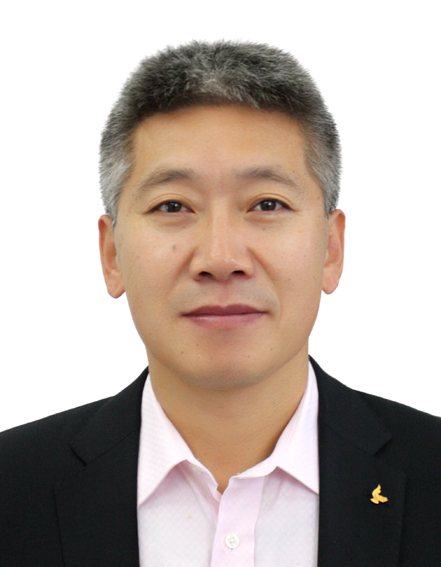
Prof. Wei Zhang
Dalian University of Technology, China
Title: Hydrogels and Magnetic Nanomaterials for Biomedicine: From Material Design to Functional Devices.
Abstract
This talk presents hydrogels and magnetic nanomaterials designed to address critical challenges in biomedicine. For cancer hyperthermia, conventional magnetic nanoparticles lack self-regulating temperature control. We developed Cr³⁺-substituted ferrite nanoparticles that stabilize hyperthermia temperature at 44 °C. Furthermore, by modulating cell mechanical properties via electrical stimulation, we enhanced nanoparticle endocytosis and thus significantly improved hyperthermia efficacy. For drug delivery, hydrogels typically face issues of burst release and poor tumor targeting. We addressed these limitations by designing injectable chitosan–hyaluronic acid systems with pH-responsive release for localized drug delivery, alongside onion-mimetic multilayer capsules that suppress burst release through the reduction of concentration gradients. For cartilage repair, existing materials often fail to replicate the depth-dependent mechanical properties of native tissue. Our gradient polyvinyl alcohol–tannic acid hydrogel overcomes this challenge by achieving a compressive modulus matching that of natural cartilage through controlled pore-density variation. For massage therapy, the absence of standardized pressure metrics is addressed by IoT-enabled wearable sensors based on conductive hydrogels, enabling real-time and remote quantitative monitoring.
Biography
Wei Zhang, Professor at the School of Mechanics and Aerospace Engineering, Dalian University of Technology (DUT); jointly appointed Professor at Liaoning Cancer Hospital; Standing Council Member of the Liaoning Anti-Cancer Association; Council Member of the Gynecological Oncology Innovation and Translation Committee of the Liaoning Society of Cell Biology. He received his B.S. and M.S. degrees from Dalian University of Technology in 1999 and 2004, respectively, and his Ph.D. from the University of Leeds (UK) in 2008. He then conducted postdoctoral research at the University of Surrey (UK). In 2011, he joined Dalian University of Technology as an Associate Professor (special appointment), was qualified as a Doctoral Supervisor in 2012, and was promoted to full Professor in 2017. His research focuses on the biological effects of mechanical, electrical, and magnetic stimulation, as well as drug-delivering hydrogels. As first/corresponding author, he has published over 130 SCI-indexed papers in journals such as Advanced Science, Nano Energy, and Small, among which 16 have the impact factor >10. His work has received over 3,800 citations, with an H-index of 35. He holds more than 30 authorized national invention patents, 3 U.S. invention patents, and 10 software copyrights. He has served as Principal Investigator for one National Key R&D Program project, one sub-project of the National Key R&D Program, and over 30 grants including those from the National Natural Science Foundation of China. He is an Associate Editor of Beni-Suef University Journal of Basic and Applied Sciences, an Editorial Board Member of Magnetochemistry and Molecular & Cellular Biomechanics.
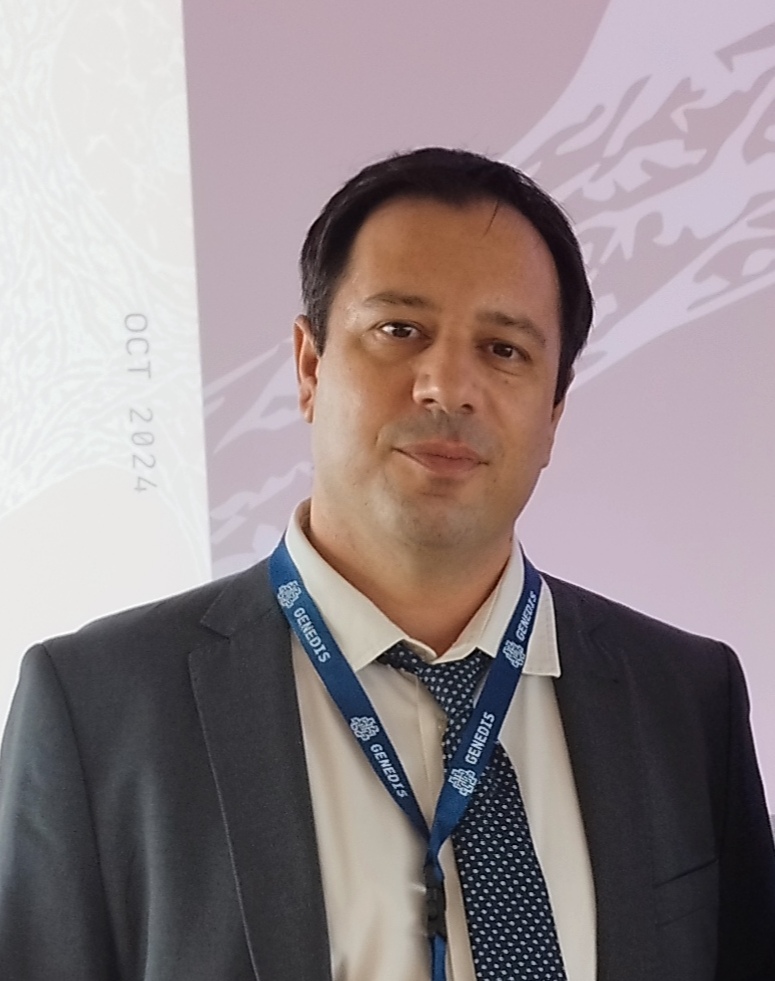
Assoc. Prof. Themis Exarchos
Ionian University, Greece
Title: Personalized Visual Speech Recognition for Restoring Communication in Post-Tracheostomy Patients Using Vision-Language Models and Retrieval-Augmented Generation.
Abstract
Tracheostomy care remains a critical component of airway management; however, communication barriers following tracheostomy can significantly affect patient well-being, clinical interaction, and overall quality of care. Although lip reading has traditionally been explored in fields such as healthcare, assistive communication, and security, recent advances in artificial intelligence have expanded its potential far beyond conventional applications. The emergence of large-scale multimodal datasets, together with the increasing complexity of video and textual information, has created a need for more sophisticated systems capable of integrating visual perception with linguistic reasoning. We propose a personalized visual speech recognition framework designed to support communication in post-tracheostomy patients. The proposed approach combines a Vision-Language Model with Retrieval-Augmented Generation to recognize words and visual patterns from lip movements. To further enhance linguistic precision, particularly in cases of phonetic ambiguity, the system incorporates a native Greek language model that refines and contextualizes the generated outputs. By bridging visual feature extraction with language-aware correction, the proposed framework improves the interpretation of silent speech and demonstrates promising performance. These findings highlight the potential of multimodal AI-driven communication tools to enhance patient-centered care and support more effective interaction between healthcare providers and individuals with impaired vocal communication.
Biography
Themis Exarchos is an Associate Professor of Data Modeling and Decision Support Systems in the Department of Informatics, Ionian University, Corfu, Greece and Director of the Bioinformatics and Human Electrophysiology Laboratory in the same Department. He holds an Engineering Diploma, from the Department of Computer Engineering and Informatics of University of Patras and a PhD in Medical Informatics from the Medical School of the University of Ioannina. He has more than 120 publications in journals, more than 130 publications in conference proceeding and more that 20 publications in books. He has worked for more than 20 years in research and development projects, funded by EU and other bodies. He is collaborating with various institutes and universities in Greece and abroad. He is also a visiting professor in the Faculty of Mechanical Engineering, University of Kragujevac, Serbia. His research interests include data modeling and mining, healthcare decision support systems, big data analytics and biomedical informatics.