
Venue
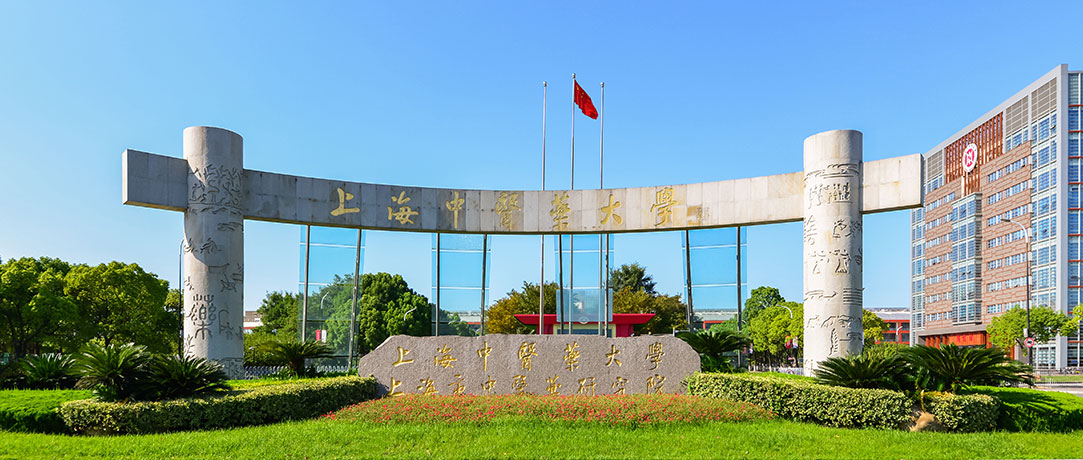
About the University
Shanghai University of Traditional Chinese Medicine (SHUTCM), founded in 1956, is among the first four higher education institutions of traditional Chinese medicine (TCM) established in the early days of New China. Co-constructed by the Ministry of Education, the National Administration of Traditional Chinese Medicine and the Shanghai Municipal People’s Government, it is a national “Double First-Class” university and a high-level university prioritized for development by Shanghai Municipality. In recent years, aligning itself with the national strategy for the revitalization and development of TCM and the mission of building a globally influential science and innovation hub, the University has continuously deepened reforms in TCM higher education, promoted independent innovation in TCM science and technology, and led the high-quality development of TCM undertakings. It strives to cultivate top-tier innovative talents in TCM and high-quality characteristic applied talents in the broader health sector, providing talent support and intellectual assurance for national TCM development and urban construction in Shanghai.
-
1956FOUNDED
-
500+ muCAMPUS AREA
-
1,300+FACULTY & STAFF
-
~10,000FULL-TIME STUDENTS
-
4NATIONAL RESEARCH PLATFORMS
-
10AFFILIATED HOSPITALS
Campus and Location
Located in the core area of Zhangjiang Science City in Pudong, the University covers an area of more than 500 mu, boasting advanced teaching and research facilities and a pleasant campus environment. Upholding the innovative spirit of advancing with the times and embracing diversity, the University pursues progress through reform and delivers results with distinctive strengths. It has been selected as a pilot university for the National Outstanding Doctor (TCM) Education and Training Program, a base under the National “111 Project” for Discipline Innovation and Talent Introduction in Higher Education Institutions, a national base for basic scientific research and teaching talent training in natural sciences, a national innovative talent training base of the Ministry of Science and Technology, and a participant in the National Program for Supporting High-Level University Overseas Graduate Studies. The University has over 1,300 faculty and staff members, including 3 academicians of the Chinese Academy of Sciences and Chinese Academy of Engineering, 3 National Masters of Traditional Chinese Medicine, 99 recipients of national high-level talent titles and 332 recipients of provincial and ministerial-level talent honors. It has nearly 10,000 full-time students.
Party Building and Governance
The University consistently upholds and strengthens the Party’s overall leadership, fully implements the Party’s education policy, fulfills the fundamental task of fostering virtue through education, and guides high-quality institutional development via high-quality Party building. It reinforces position development and consolidates primary-level Party organizations. The University boasts 7 national model Party branches, 2 national model graduate student Party branches, 1 national model graduate student Party member, 1 workshop for Party branch secretaries who are both academic leaders and Party building pioneers, and 2 special “Power Country” initiatives for such dual-role secretaries. These achievements integrate Party building deeply with teaching and research, and have cultivated a number of distinctive Party-building brands.
Talent Cultivation and Teaching Reform
As a university designated by the Ministry of Education for the construction of “Innovative Experimental Zones for Talent Training Modes” and “Featured Majors”, SHUTCM pioneered the reform of the full credit system and the three-semester medical practice model among TCM universities nationwide. It has won 1 Special Prize, 6 First Prizes and 6 Second Prizes of the National Teaching Achievement Awards. It offers elite training programs including the 9-year Program of Traditional Chinese Medicine, the 9-year Program of Integrated Traditional Chinese and Western Clinical Medicine, the 9-year Program of Chinese Materia Medica, and the Medical-Engineering Innovation Class of Intelligent Medical Engineering. Responding actively to digital and intelligent transformation, the University promotes in-depth integration of artificial intelligence with TCM education. It has developed a minor specialty, micro-courses and a series of textbooks on TCM artificial intelligence, with nearly 90% of teaching courses empowered by AI.
Discipline Development
Committed to consolidating foundations and scaling new heights while inheriting the essence of TCM, the University builds competitive strengths through first-class disciplines and explores new frontiers via interdisciplinary integration. Traditional Chinese Medicine and Chinese Materia Medica have been continuously listed among national “Double First-Class” disciplines, while Integrated Traditional Chinese and Western Medicine is included in Shanghai’s “Discipline Advancement Initiative for Double First-Class Bid”. The University hosts 4 national key disciplines: Chinese Materia Medica, Internal Medicine of TCM, Surgery of TCM and Orthopedics and Traumatology of TCM; 2 national key disciplines (cultivation): TCM Medical History and Literature, Acupuncture and Moxibustion and Tuina. It also has 13 high-level key disciplines and 38 key disciplines recognized by the National Administration of Traditional Chinese Medicine, as well as 4 Shanghai Peak & Plateau Disciplines.
Scientific Research
Following a problem-oriented and industry-education integrated innovation pathway, the University pools strengths via platforms and fuels development through achievement translation. It runs 4 national-level research platforms, including the National Medical Research Innovation Platform for Industry-Education Integration, State Key Laboratory and National Engineering Research Center, together with 14 major provincial and ministerial research platforms such as the Ministry of Education Innovation Center for Pharmaceutical Basic Research, Key Laboratories and Engineering Research Centers of the Ministry of Education. This forms a full-chain platform layout covering basic research, clinical translation and industrial services. The University has been awarded 8 National Science and Technology Progress Awards.
International Cooperation
Adhering to the cooperative philosophy of openness, inclusiveness, exchange and mutual learning, the University facilitates connectivity through standards and builds consensus through collaboration. It has established scientific research, teaching and medical cooperation ties with nearly 80 overseas universities, medical research institutions and international organizations across 30 countries and regions. Six overseas TCM centers, two Taiji Health Centers and three Taiji Health Practice Bases have been set up worldwide. The University currently enrolls 3,039 international students, including 1,525 degree-seeking international students and 1,514 short-term visiting students. It has become a preferred destination globally for international students to study TCM.
Affiliated Hospitals and Medical Services
Sticking to the school-running direction of integrated medical and education development and equal emphasis on Chinese and Western medicine, the University builds leading specialty departments and fosters brand reputation through high-quality care. It oversees 10 affiliated hospitals, covering all tertiary TCM and integrated TCM-Western medicine hospitals in Shanghai. These hospitals have a total floor area of approximately 800,000 square meters, 8,654 approved hospital beds, and serve around 21.18 million patients annually. There are 37 national key clinical specialties and 50 key specialties of the National Administration of Traditional Chinese Medicine, ranking first nationwide in the total number of top-tier specialties.
Vision and Mission
Targeting the goal of building a world-class university of traditional Chinese medicine, the University adheres to its school-running philosophy: “Pursue excellence rather than comprehensiveness, seek uniqueness rather than scale, value substance rather than fame”. It abides by the university motto: “Diligence, Benevolence, Truth-seeking and Innovation”. It regards teaching as the foundation for university establishment, scientific research as the path to strengthening the university, and medical services as the cornerstone sustaining the university. The University endeavors to contribute to inheriting this treasure of Chinese culture and building a global community of health for all, striving to become a respected world-class university with distinctive strengths in traditional Chinese medicine.